An AI-assisted experience helping drivers navigate car issues and conversations with mechanics with greater clarity and confidence.

Discipline
Product Design · UX/UI · AI
Year
2026
Role
Lead Prototyper
Tools
Figma Make, Lovable
PROJECT CONTEXT
Autocall was a client-sponsored academic project developed from a brief presented by Capital One. It is independent concept work only; not an official Capital One product.
OVERVIEW
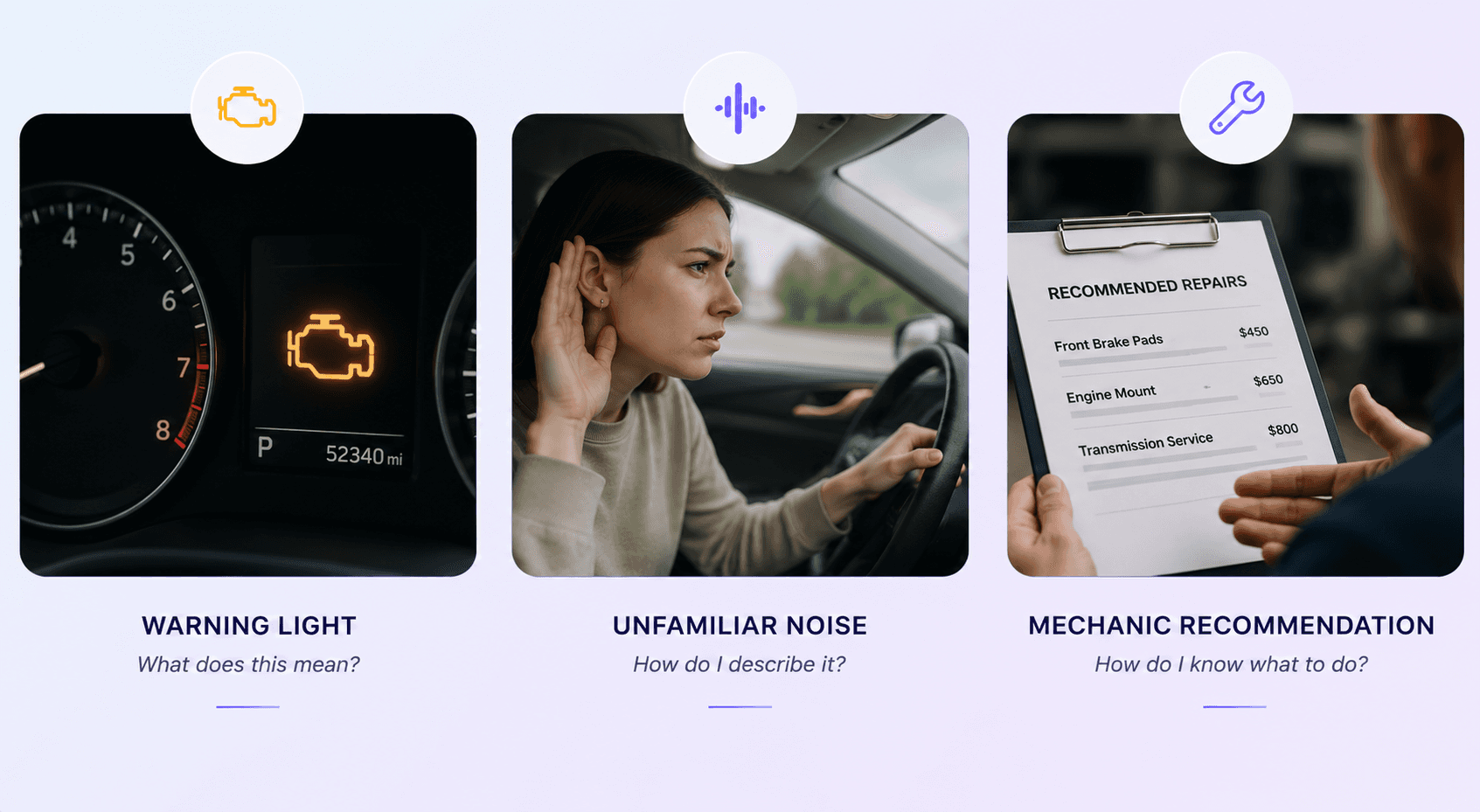
Car trouble is stressful. Talking about it can be worse.
Drivers with limited automotive knowledge often struggle not only to understand what's wrong with their car, but to know what to ask, how to describe the problem, and whether they can trust what they're being told.
MY ROLE
As Product Designer and Lead Prototyper on a team of four, I owned the design and development of the interactive prototype in Figma and Figma Make. I translated our concepts into cohesive end-to-end flows, built and connected the interactive states, and tested each path to ensure it functioned as intended.
I also helped establish the product’s visual direction across color, typography, components, and screen layouts. Throughout the process, I reviewed contrast, legibility, interaction clarity, and key interface states against accessibility guidance while working with the team to keep the experience visually and functionally consistent.
RESEARCH
Independence behind the wheel didn't always mean confidence managing the car.
Our research revealed recurring patterns around automotive knowledge, confidence, and dependence on more experienced people.
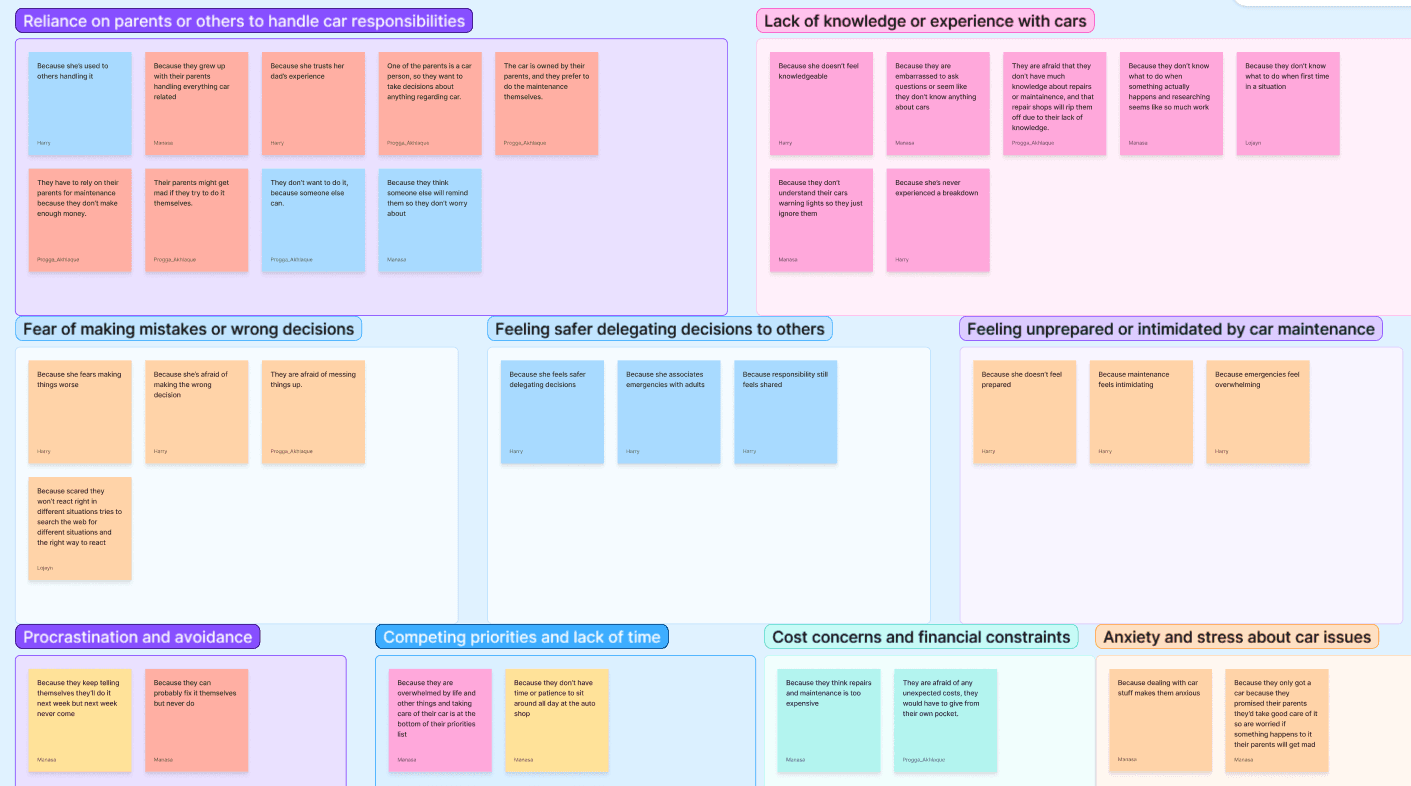
Interview synthesis and research analysis
KEY FINDINGS
01 — Knowledge gaps created hesitation
Drivers struggled with technical terminology, warning lights, unfamiliar noises, and determining whether a problem required immediate attention.
02 — Confidence was often borrowed
When drivers weren't sure what to do, they often turned to a parent, friend, or someone with more automotive experience before acting.
03 — Uncertainty continued beyond identifying the problem
Knowing that something was wrong wasn't always enough. Drivers also had to describe the issue, know what to ask, understand the response, and evaluate what they were being told.
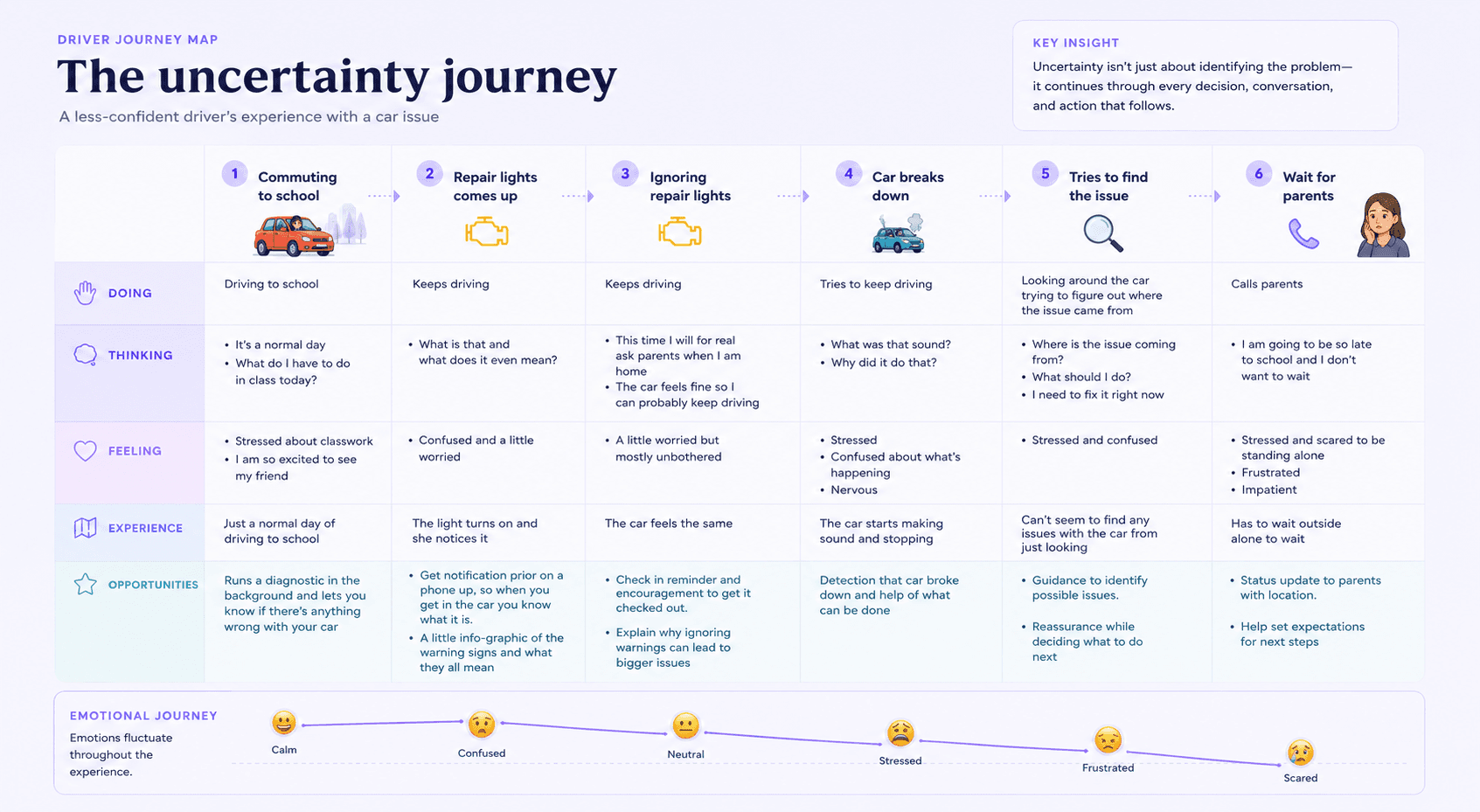
A PATTERN EMERGED
DRIVER → PARENT / TRUSTED PERSON → MECHANIC
The opportunity wasn't to make every driver a car expert. It was to help them act with greater confidence.
DESIGN EVOLUTION
The solution changed as we learned where confidence broke down.
AutoCall wasn't the starting point. We explored several ways to help drivers feel more capable of managing car problems independently, using each iteration to understand where support was still missing.
01 — SHARE RESPONSIBILITY
Co-owner accounts
Our first direction explored shared vehicle ownership, allowing drivers to involve a parent, partner, or trusted person in managing maintenance and vehicle information.
WHAT WE LEARNED
Sharing responsibility could reduce uncertainty, but it didn't necessarily help users feel prepared when they had to handle a situation themselves.
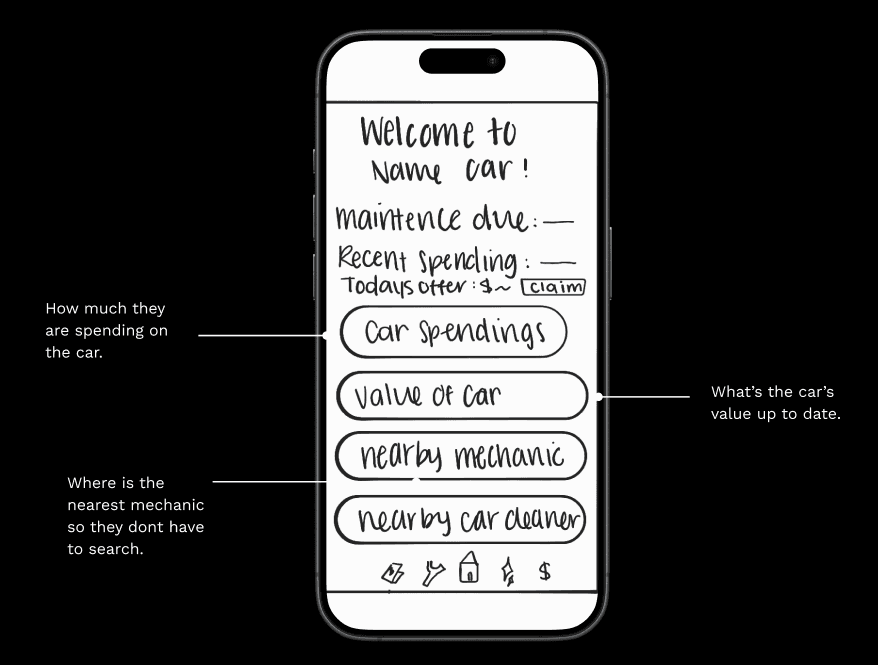
Early exploration — shared vehicle responsibility
02 — PREPARE THE CONVERSATION
Give users the words.
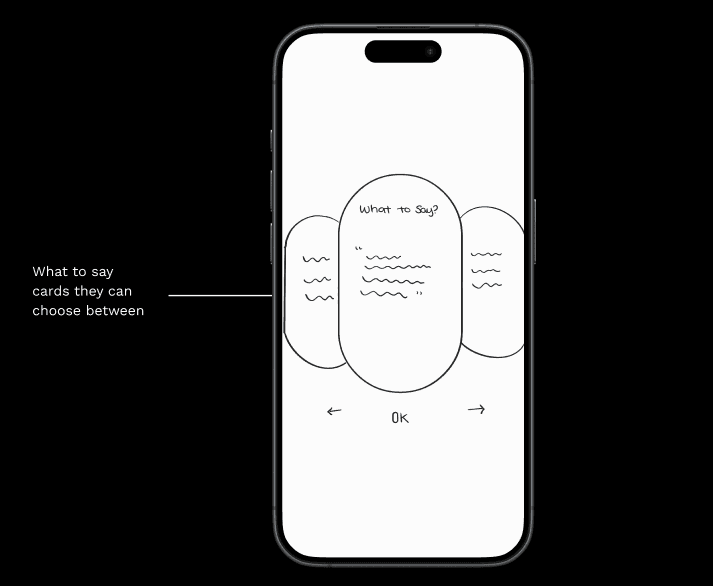
We introduced “What to Say” scripts that gave drivers language they could reference when contacting a mechanic.
WHAT WE LEARNED
Static scripts helped users begin the conversation, but the support broke down when mechanics asked unexpected follow-up questions.
But every version had the same limitation: the support stopped when the real conversation became unpredictable.
What if the support could stay with you?
Support that adapts to how much help you need.
01 — UNDERSTAND
Start with what you know.
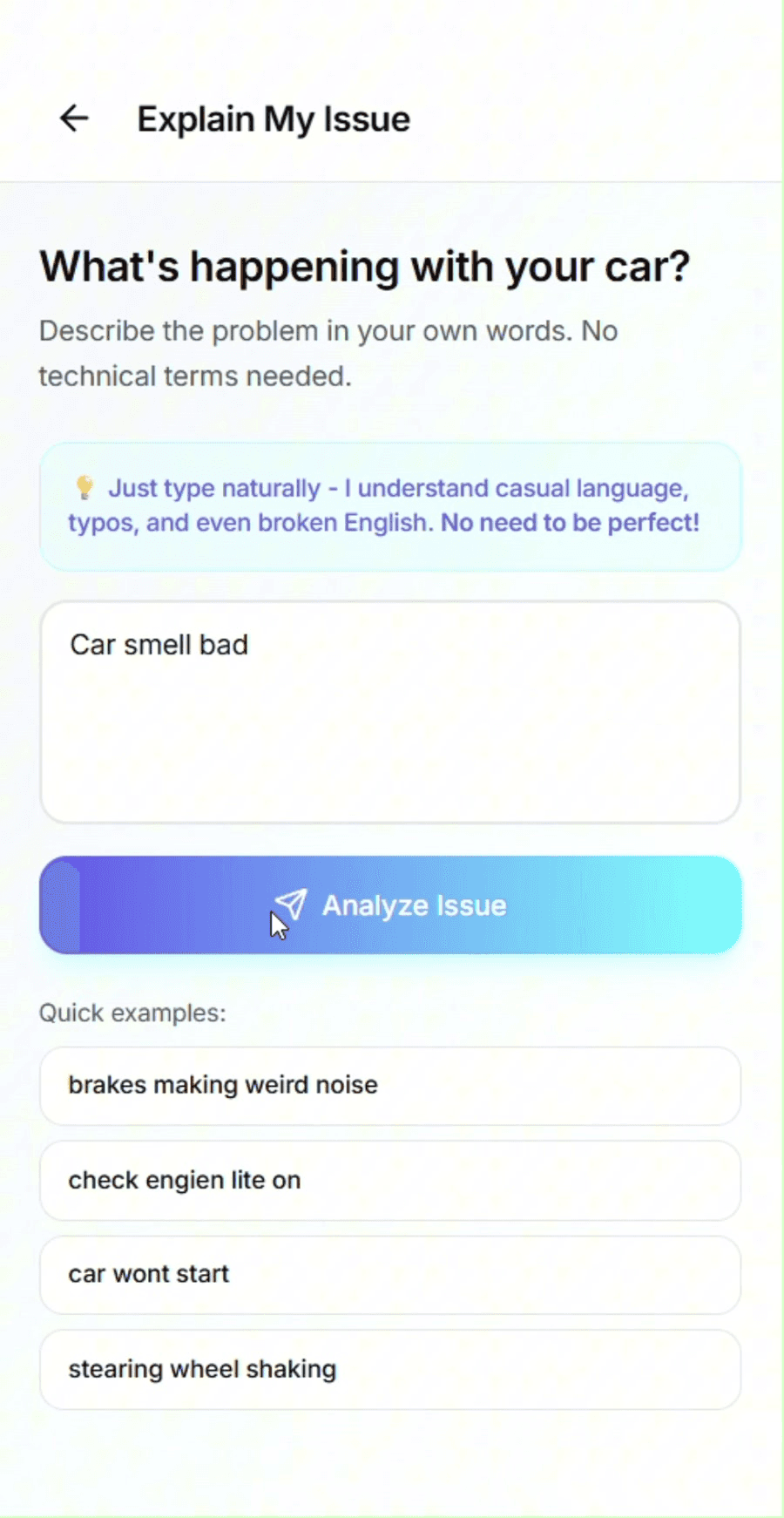
Describe the problem naturally and get context before taking action.
02 — GET SUPPORT
Choose how much help you want.
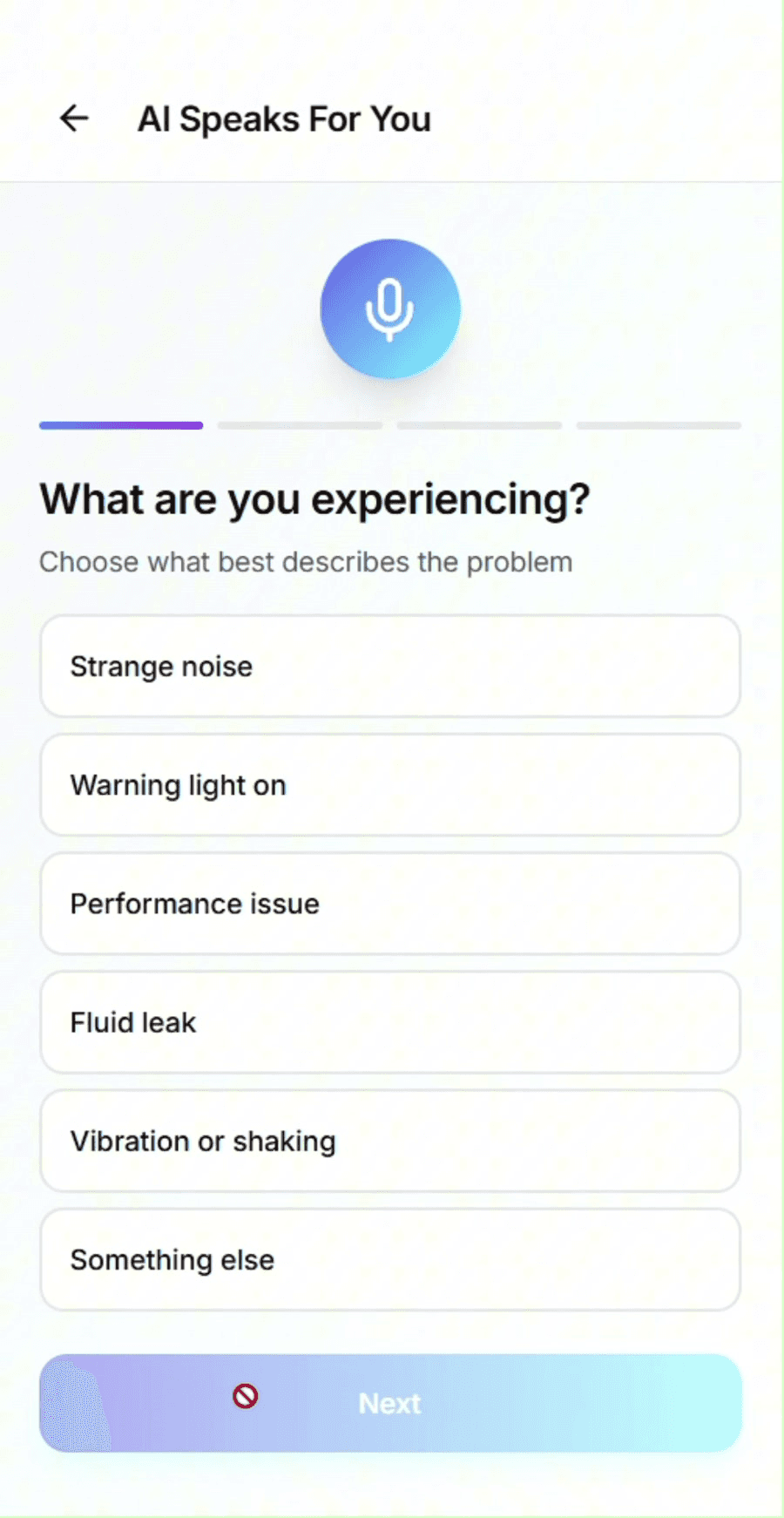
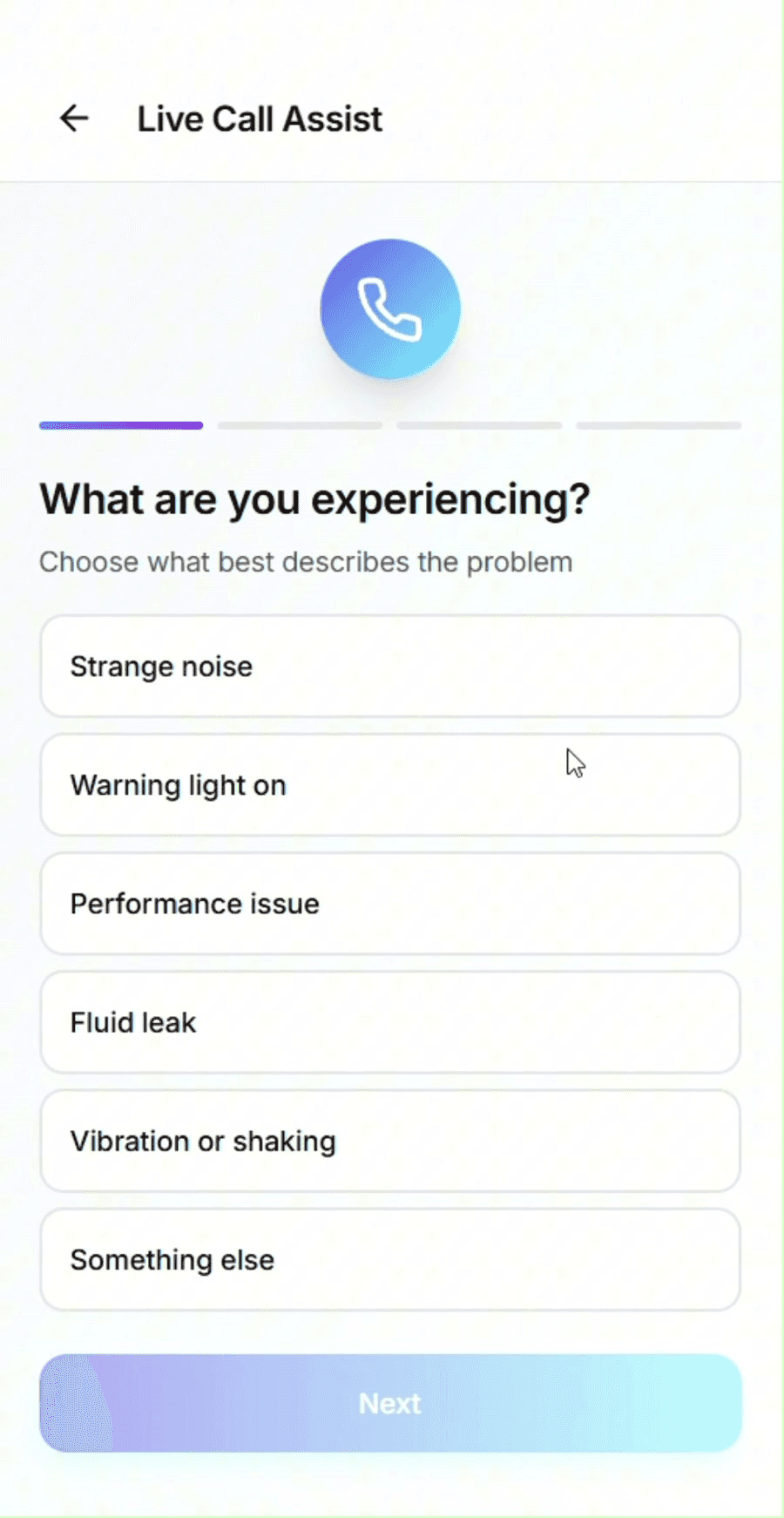
Stay in the conversation with real-time guidance, or ask AutoCall to take a more active role.
03 — STAY INFORMED
Understand the conversation while it's happening.
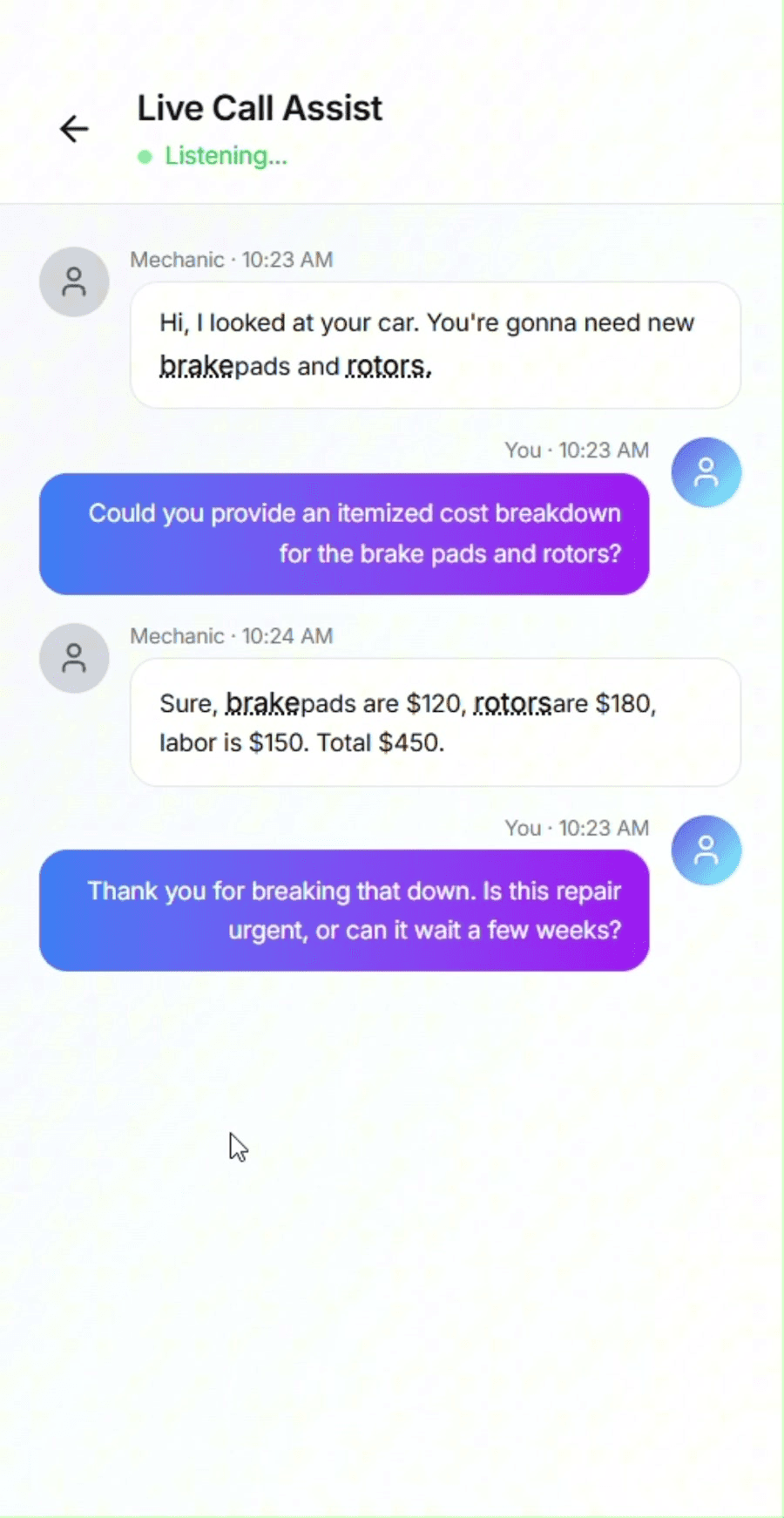
AutoCall surfaces relevant guidance in context so users can follow the conversation and respond with greater confidence.
REFLECTION
More information wasn't the answer.
AutoCall began as a way to give drivers more automotive information, but the project became stronger as we focused on a more specific need: confidence when conversations become unpredictable. If I continued the project, I'd explore trust, consent, and user control in AI-assisted calls more deeply.